Men and women have the same hormone network, both with complex interplay between hormones. Although men’s hormones don’t fluctuate quite as dramatically as women’s over a monthly cycle, they still significantly impact men’s health and wellbeing, beyond reproduction.
We take a look at the key hormones in the male network, how they work and how they can affect overall male health.
How do hormones work?
Hormones are the body’s main chemical messengers. They are made by specialist cells and are released into the bloodstream where they travel to another part of the body to send a “message”.
Hormones are a bit like your body’s own direct messaging system. They can communicate in two ways:
- Between two endocrine glands. For example, one endocrine gland releases a hormone which causes another gland to alter the amount of hormone it is producing.
- Between an endocrine gland and a target organ.
Although male hormones are mostly associated with fertility, there are a range of hormones that play a crucial role in men’s health, both physical and mental.
View our Hormone Tests and start your journey to better health today
What are the key male hormones?
If you go online and search for female hormones, chances are you’ll find pages of information about the main hormones in the female reproductive cycle, such as oestrogen and progesterone. Yet, for men, most of the information available is about testosterone. So, let’s take a look not just at testosterone, but all of the key hormones that affect male health.
Testosterone
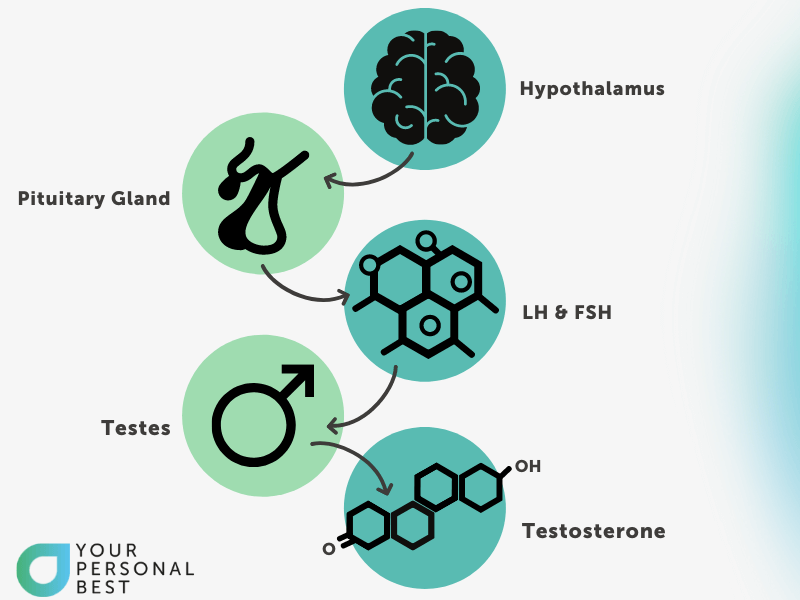
Testosterone is the major sex hormone in men [1]. It is produced mainly in the testes and is controlled by the pituitary gland in the brain. Testosterone is an androgen, a hormone either natural or synthetic that is associated with the development and maintenance of male characteristics [2].
Control Hormones – FSH & LH
Follicle stimulating hormone (FSH) and luteinising hormone (LH), production begins in the brain. The release of another hormone called gonadotropin-releasing hormone, or GnRH for short, from the hypothalamus, stimulates the production of LH and FSH from the pituitary gland.
FSH is produced in both men and women. In men, the production of FSH is controlled by the circulating levels of testosterone that is produced by the testes. FSH is important for the production and maintenance of sperm [3].
LH travels from the pituitary gland to the testes via the bloodstream and is responsible for stimulating the testicles to make testosterone.
For this reason measuring testosterone alone does not give a full picture of a man’s hormone health. Measuring any hormone in isolation, without considering the control and regulating hormones cannot give insights into the function of the hormone network, or identify any areas why suboptimal function may be occurring.
Prolactin
Prolactin is produced by the pituitary gland. In cases of high prolactin levels, the male hormone system can be dampened and has been linked to issues such as erectile dysfunction and low sex drive. Increased levels of prolactin can be caused by liver or kidney disease, drug taking, chest surgery or trauma, a recent seizure, excessive exercise, or a benign tumour on the pituitary gland, called prolactinomas.[4]
Oestradiol
Oestradiol is a type of oestrogen, most notably known as a female sex hormone. In men, testosterone gets converted to oestradiol and is responsible for regulating libido, erectile function, and the normal production of sperm.
Sex hormone binding globulin (SHBG)
SHBG transports testosterone and oestradiol around the body. It controls the amount of testosterone that is available for the body to use. In addition to this, SHBG can determine excessive or deficient levels of free, unbound testosterone, and can help to identify the cause of infertility, low libido or erectile dysfunction.
Thyroid stimulating hormone (TSH)
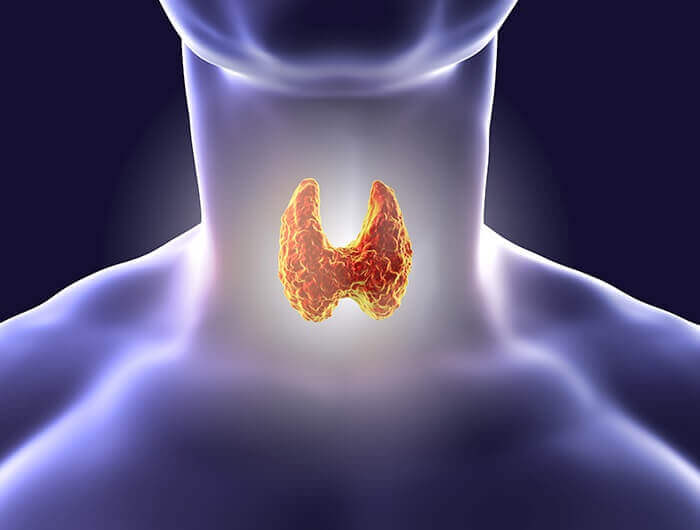
Thyroid stimulating hormone is produced by the pituitary gland in the brain and stimulates the butterfly-shaped thyroid gland in the neck to produce the hormones thyroxine (T4) and triiodothyronine (T3). Thyroid hormones are responsible for regulating the body’s metabolism. Thyroid problems can impact the production of testosterone.
Cortisol
Cortisol is produced by the adrenal glands and is the primary stress hormone. It is responsible for the body’s ‘fight or flight’ response. Some studies also show there is a significant relationship between high levels of cortisol (either pharmacologically or exercise-induced) and low testosterone levels.
Harnessing Your Hormone Health
You can gain valuable insight to your health by measuring your hormones and in turn, this can help you pinpoint potential health issues. Our male hormone blood test measures 12 biomarkers which includes key markers such as testosterone, LH and FSH, Thyroid Stimulating Hormone (TSH) and Cortisol.
Summary
Hormones influence all aspects of health so it’s important to understand what these hormones are and how they work together. Although testosterone is a principal hormone in male health, there is a diverse list of hormones that also have important functions and assists with the production of testosterone.