Frequently asked questions
This is what our customers ask us about the most. For more information, try our help centre.
What is the prostate and what does it do?
The prostate is a small gland, roughly the size of a walnut, found just below the bladder in men. It surrounds part of the urethra (the tube that carries urine out of the body). The prostate plays a vital role in the male reproductive system, producing fluid that forms part of semen. This fluid nourishes and protects sperm during ejaculation.
Why test PSA levels?
- Screening for prostate cancer – PSA testing can help prostate cancer at an early stage, often before symptoms develop. Early detection can lead to better treatment outcomes.
- Monitoring prostate cancer – If someone has already been diagnosed with prostate cancer, PSA testing is used to monitor the effectiveness of treatment and check for any signs of recurrence.
- Investigating urinary symptoms – Symptoms such as difficulty urinating, a frequent urge to urinate (especially at night), or a weak urine flow may prompt a PSA test to check for prostate issues, including cancer, benign prostatic hyperplasia (BPH), or prostatitis.
- Assessing risk in high-risk groups – Men with a family history of prostate cancer, or men of African-Caribbean or African descent, have a higher risk of developing the disease. Regular PSA testing may be recommended to monitor their prostate health more closely.
- Monitoring after prostate surgery or treatment – Following prostate surgery (such as a prostatectomy) or radiation therapy, PSA levels are tracked to ensure that the cancer has been fully treated and to identify any signs of return at the earliest stage.
What are the most common symptoms of prostate cancer?
In the early stages, prostate cancer often develops silently, with no obvious symptoms. As it progresses, it may cause:
- Difficulty starting or stopping urination
- A weak or interrupted urine flow
- Needing to urinate more frequently, especially at night
- A feeling that the bladder hasn’t fully emptied
- Blood in the urine or semen
However, these symptoms can also be caused by non-cancerous prostate conditions. That’s why regular monitoring, particularly through PSA testing, can help with early detection and peace of mind.
What are prostate-specific antigens (PSA)?
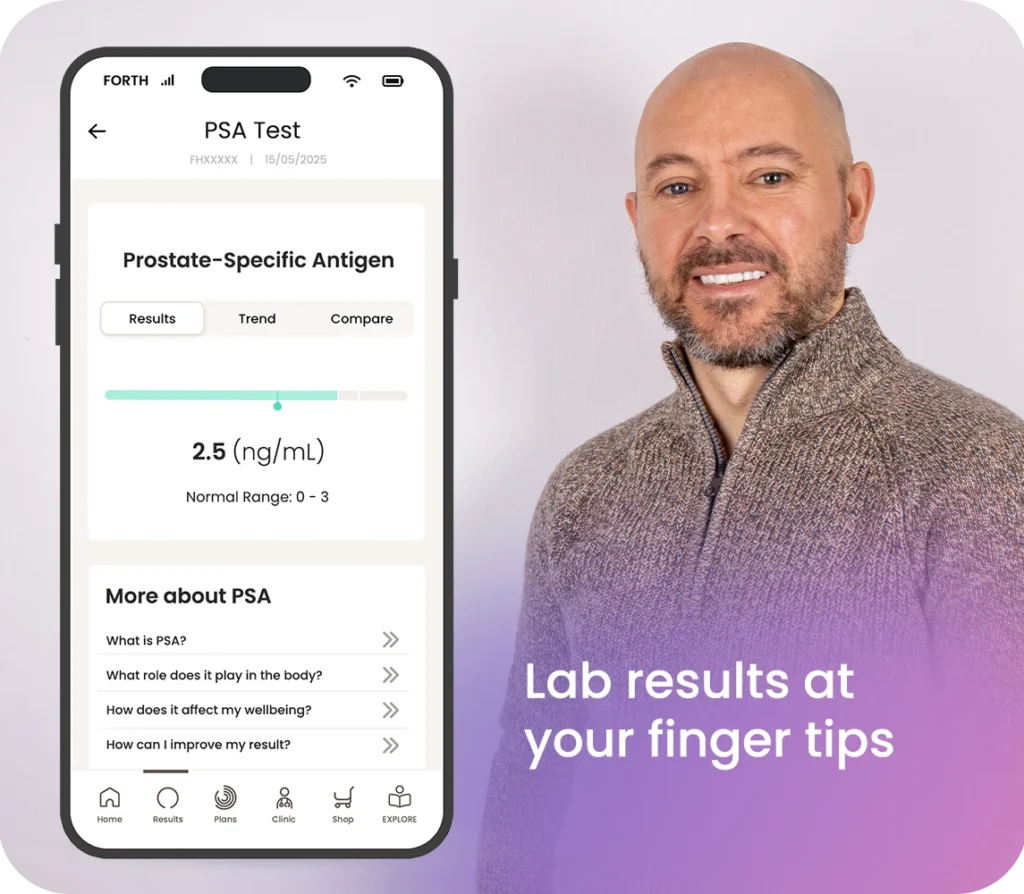
Prostate-specific antigen (PSA) is a protein produced by cells in the prostate gland. Small amounts of PSA naturally enter the bloodstream, but higher levels may be a sign of prostate cancer or other prostate conditions, such as inflammation or an enlarged prostate. A PSA blood test measures the level of this protein in your blood to help assess prostate health.
What is a normal PSA range?
PSA levels can vary based on age and individual factors. According to NICE guidance, the age-related PSA thresholds for referral are:
- Aged 50–59: PSA level ≥ 3.0 ng/mL
- Aged 60–69: PSA level ≥ 4.0 ng/mL
- Aged 70–79: PSA level ≥ 5.0 ng/mL
It’s important to note that a raised PSA level doesn’t always mean cancer is present, it simply indicates the need for further investigation. Our PSA test gives you a clearer picture, with lab analysis and doctor-reviewed results you can trust.
Who is the PSA test for?
Our at-home PSA blood test is designed for individuals who want to check their prostate health, particularly those at higher risk of prostate cancer. This includes:
- Men over the age of 50
- Men over 45 who are of Black ethnicity
- Men with a strong family history of prostate cancer
If you fall into one of these groups, regular PSA testing can help with early detection—giving you the information you need to take control of your health.
How do I prepare for a PSA test?
Preparing for a PSA test is simple, but there are a few things to keep in mind to ensure the most accurate results:
- Avoid ejaculation for 48 hours before taking the test, as it can temporarily raise PSA levels.
- Do not exercise vigorously, especially activities like cycling or anything that puts pressure on the prostate, for at least 48 hours beforehand.
- Let us know if you’ve recently had a urinary tract infection, prostate biopsy, or any procedure involving the prostate, as these can also affect PSA levels.
Our at-home test kit includes clear instructions to help you collect your sample under the best conditions.
How often should you have a PSA test?
How often you should take a PSA test depends on your age, risk factors, and previous results. As a general guide:
- Low-risk individuals with normal PSA levels may only need testing every 1–2 years.
- Men at higher risk—such as those over 50, of Black ethnicity, or with a family history of prostate cancer—may benefit from more regular annual testing.
Tracking PSA levels over time is often more useful than a single reading. Our test helps you monitor changes and spot trends, so you can take action if anything changes.
How can I reduce my PSA levels?
PSA levels can fluctuate for a number of reasons, not all of which are linked to prostate cancer. While there’s no guaranteed way to lower PSA, there are steps you can take to support your prostate health and potentially reduce raised levels:
-
- Maintain a healthy weight – Obesity is linked to higher PSA and increased prostate cancer risk.
- Eat a balanced diet – Focus on foods rich in antioxidants and healthy fats, such as tomatoes, leafy greens, oily fish, nuts and seeds.
- Stay active – Regular exercise, especially aerobic activity, may help support prostate function and overall hormone balance.
- Limit red meat and processed foods – A diet high in saturated fats has been associated with prostate issues.
- Cut down on alcohol and quit smoking – Both can affect inflammation and general prostate health.
If your PSA levels are raised, it’s important to monitor them regularly and speak to a healthcare professional for tailored guidance. Our at-home test gives you accurate insights and expert-reviewed results to help you stay informed.